Digital Product Passports for Watches
See where your watches go
Reach owners beyond the first sale
Strengthen trust against counterfeits
Be ready for Digital Product Passports
Ownership transfers disappear from view and are missed customer relationships.
Verification often depends on cards or private databases and can be forged.
Structured product data will be required for watches sold into the EU.
Issued once. Designed to move with the watch.
Define materials, provenance, and specifications once.
Generate unique identities for every individual timepiece.
Connect the physical watch to its digital twin instantly.
Maintain an accurate record without manual data entry.
Instant access via any smartphone camera.
Access provenance, specs, and luxury-grade documentation.
Discreetly link the watch to an owner's profile.
Maintain provenance clarity across secondary market sales.
We’re selecting a limited number of independent brands to implement digital provenance early. The pilot runs on live watches and real workflows.
Be prepared for Digital Product Passport requirements
Offer a verifiable authenticity record for every watch
Maintain visibility beyond the first sale
Enterprise-grade infrastructure — no internal engineering required
Joshua sits at the intersection of traditional horology and modern SaaS architecture. Leveraging a decade of experience in product and UX, he focuses on infrastructure that protects brand equity while ensuring regulatory readiness. As the Senior Web Lead at SoSafe Awareness and founder of 12&60, he has been covering the independent watch scene since 2013 and connecting brands and enthusiasts through the WatchIt! Fair since 2019.
Deeply obsessed with watchmaking provenance and software craftsmanship, Joshua is dedicated to making compliance infrastructure invisible, operationally light, and luxury-grade. By combining technical expertise in enterprise SaaS with a genuine passion for the independent watchmaker community, he ensures that Horology.id supports the long-term growth and technical excellence of the brands it serves.
Luke is an experienced technology leader with over a decade of building and scaling software products across start-ups and enterprise environments. As CTO, he takes a pragmatic, big-picture approach to technology — setting direction, guiding architecture, and ensuring platforms support long-term growth and commercial outcomes.
He has led high-impact projects and engineering teams, with a strong ability to break down complex challenges into clear, actionable solutions. Known for balancing technical excellence with product thinking, Luke works closely across engineering, product, and commercial teams to deliver scalable, reliable SaaS platforms.
A former founder and business owner, Luke brings an entrepreneurial mindset to technology leadership, understanding how technical decisions affect customers, operations, and growth. With an early background in design, he also brings a strong appreciation for user experience, clarity, and thoughtful execution.
A Digital Product Passport is a structured digital record linked to an individual watch. It
contains
key information such as the model reference, serial number, materials, manufacturing details,
and
specifications.
The passport is typically accessed via a QR code included with the watch and provides a durable
record that can remain with the watch throughout its lifecycle.
The European Union is introducing the Ecodesign for Sustainable Products Regulation (ESPR),
which
will require structured product data for many goods sold into the EU.
Digital Product Passports are the mechanism through which that data will be accessed. For watch
brands, implementing passport infrastructure early provides both regulatory readiness and
improved
product traceability.
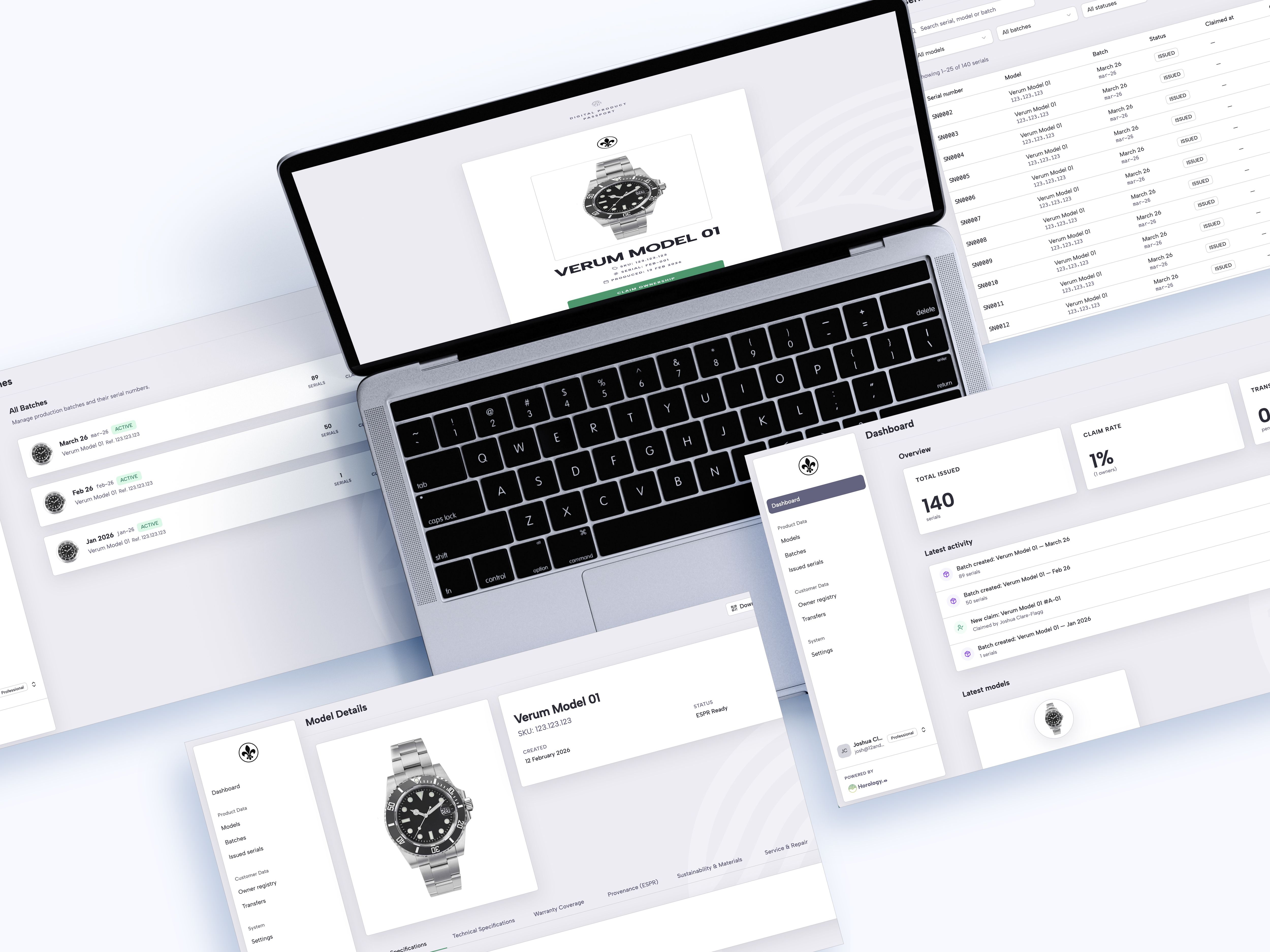
Horology.id allows watch brands to create a digital passport for each watch they produce.
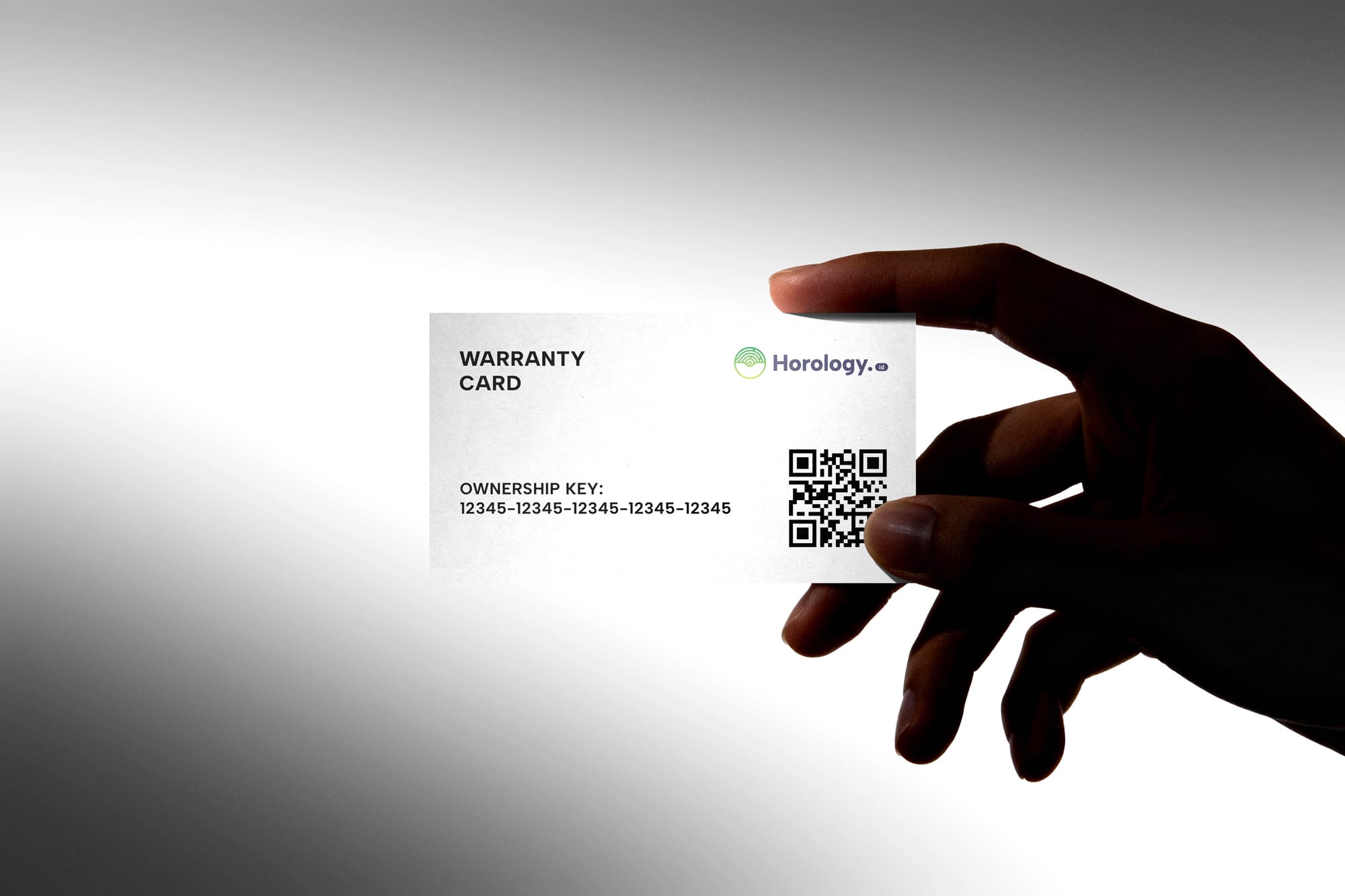
Brands issue serial numbers, generate QR codes for warranty cards, and manage product data
through a
simple dashboard. Owners can scan the QR code to view the passport and optionally claim
custodial
ownership of the watch.
The passport then evolves with the watch over time.
No.
Horology.id is designed so that owners interact with their watch passport using a simple
email-based
claim process. Wallets, tokens, and blockchain infrastructure are abstracted away from the user
experience.
Not necessarily.
Digital Product Passports can exist as conventional digital records. However, Horology.id’s
Certified tier records watches and ownership transfers on a blockchain registry to create a
tamper-resistant history that cannot be altered later.
This provides stronger long-term provenance and ownership integrity.
No.
Digital Product Passports complement traditional warranty cards rather than replacing them. Most
brands integrate a QR code onto the warranty card so that scanning the card provides access to
the
passport.
This preserves the physical artefact while adding a durable digital layer.
Horology.id is designed for independent and luxury watch brands that want to maintain visibility
over the lifecycle of their watches while preparing for upcoming Digital Product Passport
requirements.
The platform provides a simple, brand-safe way to issue passports, manage serials, and support
ownership continuity over time.